


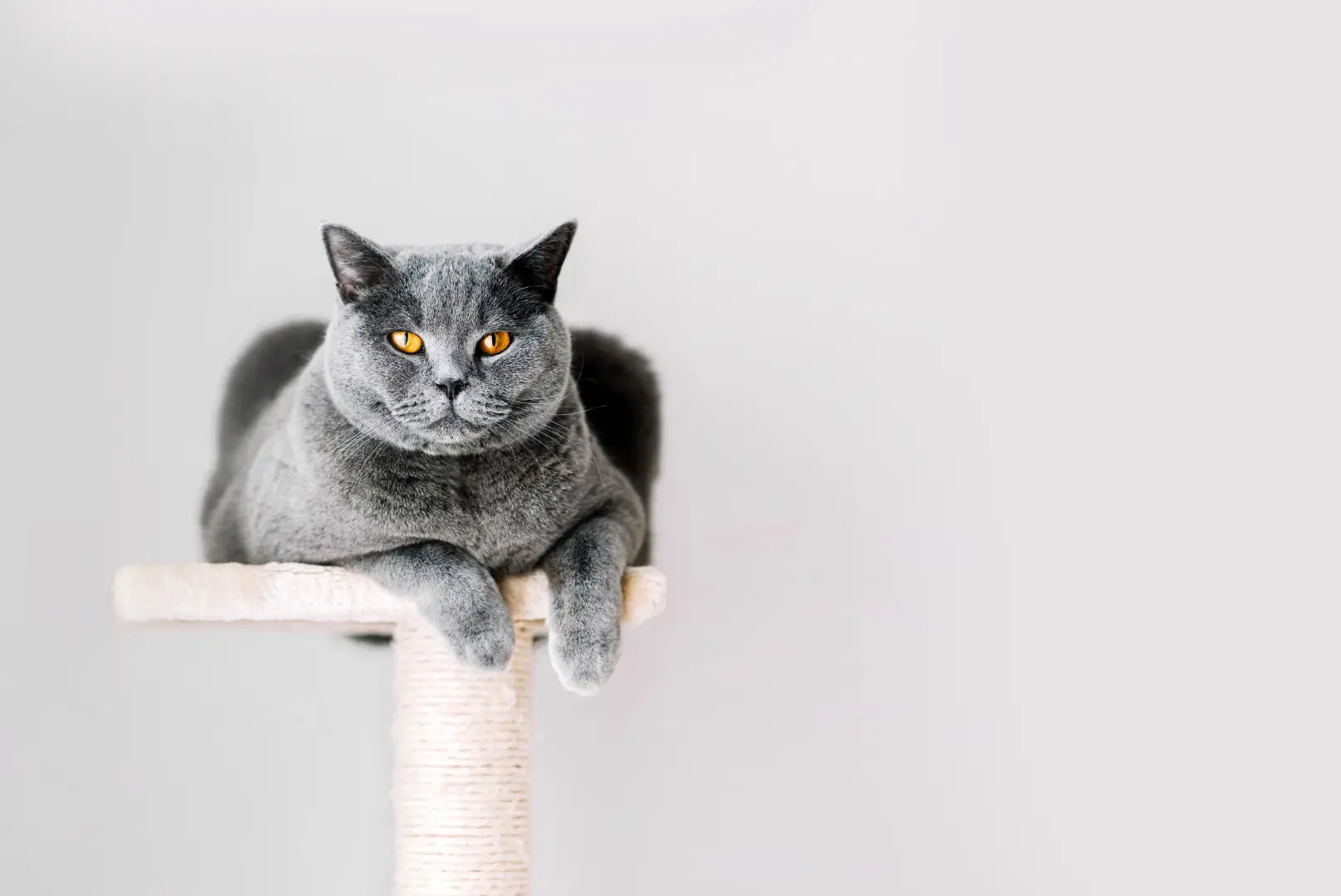

The British Shorthair is a true favorite among cat lovers worldwide. With its round face, amber eyes, and unmistakable "plush" coat, it looks just like a living teddy bear. But this breed is far more than just a pretty face: it is one of the most stable, friendly, and adaptable cat breeds in existence.
The British Shorthair is the ideal companion if you are looking for a calm presence in your daily life. They aren't typical "lap cats" who want to be carried around constantly, but they are loyal partners who love relaxing near you. Their easygoing nature makes them the perfect indoor cat—provided you keep an eye on their waistline!
In this comprehensive guide, you’ll discover why the British Shorthair is the perfect choice for families and professionals alike, and what these cozy hunters expect from their owners.
Table of Contents
- Fast Facts: Data & Statistics
- History: From Roman Legions to Feline Royalty
- Character: British Politeness on Velvet Paws
- Color Variety: More Than Just "British Blue"
- Lifestyle: The Ideal Indoor Cat?
- Enrichment: Overcoming the "Inner Couch Potato"
- Social Behavior: The Breed in a Family Setting
- Care & Health: What Matters Most
- Nutrition: The Risk of Obesity
- Buying: How to Identify a Reputable Breeder
- FAQ: Frequently Asked Questions

Fast Facts: British Shorthair
| Feature | Description |
|---|---|
| Origin | Great Britain |
| Size | Medium to large, cobby build |
| Weight | Females: 7–13 lbs | Males: 11–18 lbs |
| Life Expectancy | Approx. 12–16 years |
| Coat Type | Shorthair, very dense, plush |
| Colors | Many varieties – most famous: "British Blue" |
| Character | Easygoing, friendly, calm, intelligent |
| For Beginners | Highly recommended (patient and uncomplicated) |
| Maintenance | Low to moderate (regular brushing required) |
| Energy Level | Moderate (tends to be sedentary) |
History: From Roman Legions to Feline Royalty
The roots of the British Shorthair go back centuries. It is believed that the ancestors of these cats were brought to Britain by the Romans to protect legionnaires' supplies from rodents. Isolated on the island for centuries, a robust breed developed with a dense, water-repellent coat—perfect for the harsh English climate.
In the late 19th century, Harrison Weir, the "Father of the Cat Fancy," began selectively refining the breed. After the World Wars, when populations were severely depleted, Persians were crossbred into the line. This gave the British Shorthair its look today: the round head, the powerful build, and that incomparable plush fur.

Character: British Politeness on Velvet Paws
If you had to describe the character of the British Shorthair in one word, it would be: unshakeable. They are the definition of calm. While other breeds might hide under the sofa when guests arrive, the British Shorthair usually observes the action with aristocratic composure from their cat tree.
They aren't cats that constantly demand attention with loud meowing. Instead, they show affection subtly: following you into the kitchen, sitting next to you on the couch, or gently head-butting you. Many owners appreciate this low-maintenance companionship. Pro tip: Most British Shorthairs dislike being carried; they prefer to keep all four paws on solid ground.
Color Variety: A Spectrum of Possibilities
"Blue" (an elegant silver-gray) is the breed's trademark, but today there are over 300 recognized color variants. This variety makes them fascinating for enthusiasts:
- Solid: One color in Blue, Black, White, Cream, or Chocolate.
- Bicolor: Combinations with white.
- Tabby: Mackerel, spotted, or marbled (classic "Whiskas" look).
- Point: Light body color with dark points on the face and paws.
- Silver Shaded: A white coat where only the tips are dark—very sophisticated!

Lifestyle: The Ideal Indoor Cat?
Due to their moderate temperament, the British Shorthair is predestined for indoor living. They don't have a strong urge for vast outdoor territories as long as their "four walls" are engaging. However, they do enjoy a secured balcony or a screened window to catch a breeze.
A vital aspect of their care is vertical space. Since British Shorthair males can get quite heavy, your cat tree must be massive and stable. Flimsy, wobbly models are often avoided by these powerful animals.
Enrichment: Overcoming the "Inner Couch Potato"
This is the biggest challenge for owners: the breed tends toward laziness. A well-fed British Shorthair may sleep 16 to 20 hours a day. Without incentives, they move very little, which can lead to joint issues. Strategies for more action:
- Food Foraging: Use puzzle feeders or treat balls. Dry food should never just sit in a bowl.
- Wand Toys: Short, intense play sessions (5-10 minutes) several times a day are more effective than one long hour.
- Clicker Training: They are highly intelligent and love learning tricks—it keeps their minds sharp!
Social Behavior: The Breed as a Family Member
They are often called "beginner cats" because they are so forgiving. In families with children, they are a pillar of calm. If things get too hectic, they simply retreat rather than lash out. They also usually get along famously with dogs, provided the introduction is handled carefully.
Important: A British Shorthair should not be kept as an only cat if you work full-time. They suffer in silence, but they are very social animals who need feline interaction.

Care & Health: What You Need to Know
Their coat is unique due to the dense undercoat. Brushing once a week is mandatory. During the shedding seasons in spring and fall, you should brush daily to prevent matting and reduce the amount of swallowed fur.
Breed-Specific Health Issues: While robust, there are two genetic issues monitored by responsible breeders:
- HCM (Hypertrophic Cardiomyopathy): A heart condition where the heart muscle thickens.
- PKD (Polycystic Kidney Disease): The formation of cysts in the kidneys.
Always ask your breeder for up-to-date ultrasound results of the parent cats!
Nutrition: Less is Sometimes More
A neutered male is a master at begging for food. Since the breed is prone to obesity, high-quality wet food with high meat content (grain-free and sugar-free) is essential. Avoid constant access to dry food, as this can cause calorie intake to skyrocket uncontrollably.
Buying: Keeping Your Eyes Open
A kitten from a reputable breeder (with pedigree and health certificates) currently costs between $1,000 and $1,800. Don't be lured by "bargains" on classified sites. "Mixed breeds" without papers often come from kitten mills where health screenings are ignored. A good breeder will let you visit the mother and won't release kittens before 12 weeks of age.

FAQ: Frequently Asked Questions
Are they typical lap cats?
Not exactly. They love proximity and physical contact but prefer to decide when and for how long. Many prefer lying *next* to their humans rather than *on* them.
Do they shed a lot?
Yes, due to the extreme density of the undercoat, they lose hair regularly. A high-quality vacuum is a wise investment for any owner.
How long can they stay alone?
They are quite independent, but they shouldn't be alone for more than 8 hours without a feline companion. A second cat is the best solution.
Conclusion
The British Shorthair is the "rock" of the cat world. They bring peace to a hectic home and offer their owners an unobtrusive, deep loyalty. If you are willing to invest time in grooming and watch their diet, you will be rewarded with one of the most charming and uncomplicated companions imaginable.


Leave a comment
This site is protected by hCaptcha and the hCaptcha Privacy Policy and Terms of Service apply.